
|
|
PanelsKDD 2009 Panel on Open Standards and Cloud ComputingEmerging Trends in Open Standards and Cloud Computing for Data MiningOver the past decade, we have seen tremendous interest in the application of data mining and statistical algorithms, first in research and science and, more recently, across various industries. Impacting scientific and business applications alike, interoperability and open standards still lack broader adoption in the data mining community. In addition, emerging trends in cloud computing and Software as a Service will play a critical role in promoting the effective implementation and widespread application of predictive models. The panel, comprised of a distinguished group of thought leaders representing key software vendors in the data mining industry, will discuss various topics related to open standards and cloud computing, with a particular focus on the practical use of statistical algorithms, reliable production deployment of models and the integration of predictive analytics within other systems. ABOUT THE ORGANIZER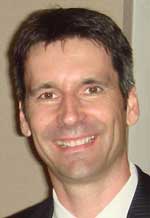
Michael Zeller. Dr. Zeller is currently the CEO of Zementis, a software company focused on predictive analytics and advanced decisioning technology. His mission is to combine science and software to create superior business and industrial solutions that leverage predictive models and rules in real-time. Previously, Dr. Zeller served as CEO of OTW Software, a company focused on implementing structured software engineering processes and delivering object-oriented analysis and design services. Prior to his engagement at OTW, he held the position of Director of Engineering for an aerospace firm, managing the implementation of IT solutions for major aerospace corporations. Dr. Zeller received a Ph.D. in Physics from the University of Frankfurt (Germany), with emphasis in the development of neural networks, robotics, and human-computer intelligent interaction. He received a visiting scholarship from the University of Illinois at Urbana-Champaign and was the recipient of a Presidential Postdoctoral Fellowship from the Computer Science Department at the University of Southern California. http://www.zementis.com ABOUT THE PANELISTS
Robert Grossman. Robert Grossman is the Managing Partner of Open Data Group, which he founded in 2002. Open Data Group provides management consulting and outsourced services focused on analytics. Grossman is also the Director of the Laboratory for Advanced Computing (LAC) and the National Center for Data Mining (NCDM) at the University of Illinois at Chicago (UIC). The Lab and Center perform research, sponsor standards, manage an international data mining testbed, and engage in outreach activities in the areas of data mining and data intensive computing. Robert Grossman became a faculty member at the University of Illinois at Chicago in 1988 and is a Professor of Mathematics, Statistics, and Computer Science. From 1984-1988 he was a faculty member at the University of California at Berkeley. He received a Ph.D. from Princeton in 1985 and a B.A. from Harvard in 1980. He has had a half time appointment at UIC since 1996. He is also an Associate Senior Fellow at the Institute for Genomics and Systems Biology at the University of Chicago. Prior to founding the Open Data Group, he founded Magnify, Inc. in 1996. Magnify provides data mining solutions to the insurance industry. Grossman was Magnify’s CEO until 2001 and its Chairman until it was sold to ChoicePoint in 2005. He has published over 150 papers in refereed journals and proceedings and edited six books on data mining, data intensive computing, Internet technologies, high performance computing, high performance networking, business intelligence, e-business, and related areas. http://www.opendatagroup.com/ 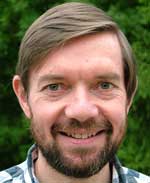
Christoph Lingenfelder. Dr. Christoph Lingenfelder is part of the development team for IBM's data mining software at IBM Germany Research & Development in Böblingen. He just returned from a research assignment at the IBM Watson Research Center in Yorktown Heights, New York, doing research in the field of mathematical data analysis and data mining. Christoph represents IBM in a number of standardization groups (DIN, ISO, OMG, JCP, and DMG) with database and data mining topics. As editor for ISO SC32, he published the first version of the data mining standard in SQL/MM (ISO/IEC 13249-6). He also participates in the development of PMML in the Data Mining Group. Since the first version in 1996, Christoph has been involved in the development of Intelligent Miner for Data. Originally he was responsible for the development of a clustering algorithm and a numeric prediction algorithm (RBF). Previously, he did research in the area of knowledge representation at the IBM Scientific Center in Heidelberg, Germany. Christoph studied physics and mathematics at the universities of Karlsruhe, Germany, and Maryland, USA. Subsequently he got a PhD in artificial intelligence from the University of Kaiserslautern, Germany. http://www.ibm.com 
Michael Berthold. Michael R. Berthold is currently the Nycomed-Professor for Bioinformatics and Information Mining at Konstanz University and CEO of KNIME.com GmbH, Zurich. He spent many years in the US at academic and industrial research institutions and has published extensively in the areas of machine learning methods for the explorative analysis of large, heterogeneous information repositories. He is one of the creators of the open source data analysis pipeline platform KNIME. http://www.knime.org
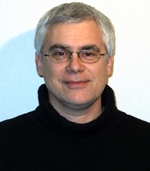
Erik Marcadé. With over 17 years of experience in the neural network industry, Erik Marcade, founder and chief technical officer forKXEN, is responsible for software development and information technologies. Prior to founding KXEN, Mr. Marcade developed real-time software expertise at Cadence Design Systems, accountable for advancing real-time software systems as well as managing “system-on-a-chip” projects. Before joining Cadence, Mr. Marcade spearheaded a project to restructure the marketing database of the largest French automobile manufacturer for Atos, a leading European information technology services company In 1990, Mr. Marcade co-founded Mimetics, a French company that processes and sells development environment, optical character recognition (OCR) products and services using neural network technology. Prior to Mimetics, Mr. Marcade joined Thomson-CSF Weapon System Division as a software engineer and project manager working on the application of artificial intelligence for projects in weapons allocation, target detection and tracking, geo-strategic assessment, and software quality control. He contributed to the creation of Thomson Research Laboratories in Palo Alto, CA (Pacific Rim Operation—PRO) as senior software engineer. There he collaborated with Stanford University on the automatic landing and flare system for Boeing, and Kestrel Institute, a non-profit computer science research organization. He returned to France to head Esprit projects on neural networks development. Mr. Marcade holds an engineering degree from Ecole de l’Aeronautique et de l’Espace, specializing in process control, signal processing, computer science, and artificial intelligence. http://www.kxen.com 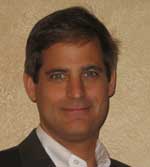
Rick Pechter. Rick Pechter is Senior Director of MicroStrategy’s Pacific Technology Center in Carlsbad, CA. Rick and his team have responsibility for several key portions of MicroStrategy’s Business Intelligence platform including MicroStrategy Office, MicroStrategy Web Services and MicroStrategy Data Mining Services. He has over twenty years experience in the computer and data processing industries, with degrees in Electrical Engineering (BSEE, UC Irvine) and Engineering Management (MSEM, National Technological University). http://www.microstrategy.com/
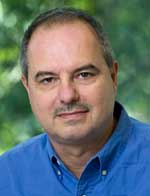
Mike Hoskins. Mike Hoskins brings more than 20 years of experience in developing and managing software companies to his roles as Chief Technology Officer of Pervasive Software and General Manager of Pervasive’s Integration business unit. Mike joined Pervasive through its December 2003 acquisition of Data Junction Corporation, where Mike served as president for the prior 15 years. As Chief Technology Officer, Mike champions Pervasive's technology direction, evangelizes the company's industry-leading low-TCO approach to data management and integration, and directs the company’s Innovation Labs. Mike received the AITP Austin chapter’s 2007 Information Technologist of the Year Award for his leadership in the development of Pervasive DataRush™. In his role as General Manager, Mike is responsible for the growth of the Integration business unit and its strategic leadership position in agile, embeddable integration. Graduating summa cum laude in 1977, Mike recently received the Distinguished Alumni Award from Bowling Green State University in Ohio. In 1982 he formed SaudiSoft, a leading software company in the Middle East. Mike is a widely respected thinker in the integration industry, has been featured in a variety of publications, and speaks worldwide on innovations in data management and integration. Topics which he has explored from an industry perspective include Software as a Service, ROI in the integration space, the last mile of integration, integration out of the box and the multi-core revolution. http://www.pervasive.com/
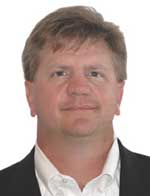
Rich Holada. As Senior Vice President of Technology, Rich Holada’s role is to drive and execute the product and technology vision of SPSS in our products and for our customers. Holada joined SPSS in November 2006 as Senior Vice President of Research & Development. Holada brings with him nearly 20 years of deep software research and development background and diverse industry experience in the technology industry. Previously, he was Vice President of Industry Development at Oracle Corporation, where he earlier held the post of Vice President of CRM Development. Holada has also held senior research and development positions at PeopleSoft, Inc., Trimark Technologies, Inc., and Intelligent Trading Systems, Inc., as well as earlier systems engineering positions at Sun Microsystems, Inc. http://www.spss.com
The KDD-2009 organizing committee invites proposals for panels to be held at the conference. Panel proposals should address emerging, controversial and critical issues in data mining that would likely to have a lasting impact on the field and would also lead to exciting discussions and debates. A mix of industry, academic and government participants is encouraged. For this year´s conference we are interested in addressing new topics, particularly centered around human issues related to data mining (e.g., privacy, ethics, cultural differences, applications and implications of data mining on end users, etc.). Proposal DetailsPanel proposals should be no more than four pages long and should include the following:
IMPORTANT: the KDD 09 panels will be summarized in a paper that will be published in the conference proceedings. Therefore, the panel organizer will be requested to collect from the panelists, in writing, the responses to some of the questions well in advance of the conference. The conference panel chair (A. Jaimes) will collect the materials and work with the panel organizers selected to produce the paper. The motivation for having the paper is two-fold: make the panelists´ perspectives available after the conference, and ensure that panelists (and audience) give considerable thought to the issues prior to the panel. Panel proposals should be sent by e-mail in PDF or ASCII format to the Panel Chair Alejandro Jaimes () |
 Wayne Thompson. Wayne Thompson is an Analytics Product Manager at SAS. His primary efforts are centered around bringing relevant product/solution feedback from customers to the SAS Enterprise Miner and SAS Model Manager development teams to extend SAS® Institute's leadership position in the data mining market. He has been employed at SAS® since 1992. During his tenure at SAS, Wayne also served as a Statistical Services specialists for the Education Division in which he developed and taught applied statistical courses as well as collaborated on several data analysis projects for clients from many industries including pharmaceuticals, financial services, health care, tele-communications, and insurance. Wayne has over 16 years of experience in CRM, eCRM, data mining, database marketing and strategic planning working with a broad range of customers. Wayne received his Ph.D. and M.S from the University of Tennessee in 1992 and 1987, respectively. During his PhD program, he was also a visiting scientist at the Institut Superieur d'Agriculture de Lille, Lille, France where he taught applied data analysis courses and assisted students during with their thesis research.